Overwintering counts of western monarch butterflies have declined more than 99.9% over the past 40 years.
In November 1998, 40,000 monarch butterflies rested in the eucalyptus trees at Morro Bay Golf Course in California. Last November, there were just two.
The annual California monarch butterfly count, released in January, showed the lowest two-year average on record.
As temperatures drop in the fall, monarch butterflies from Washington to Arizona fly to the California coast where they hunker down for the winter. The Xerces Society, an insect conservation nonprofit, has coordinated since 1997 an effort to count the butterflies as they gather in the branches of select coastal trees. Although the organization has more than doubled the number of sites it surveys since 1997, their volunteers find fewer and fewer pairs of the orange-and-black wings.
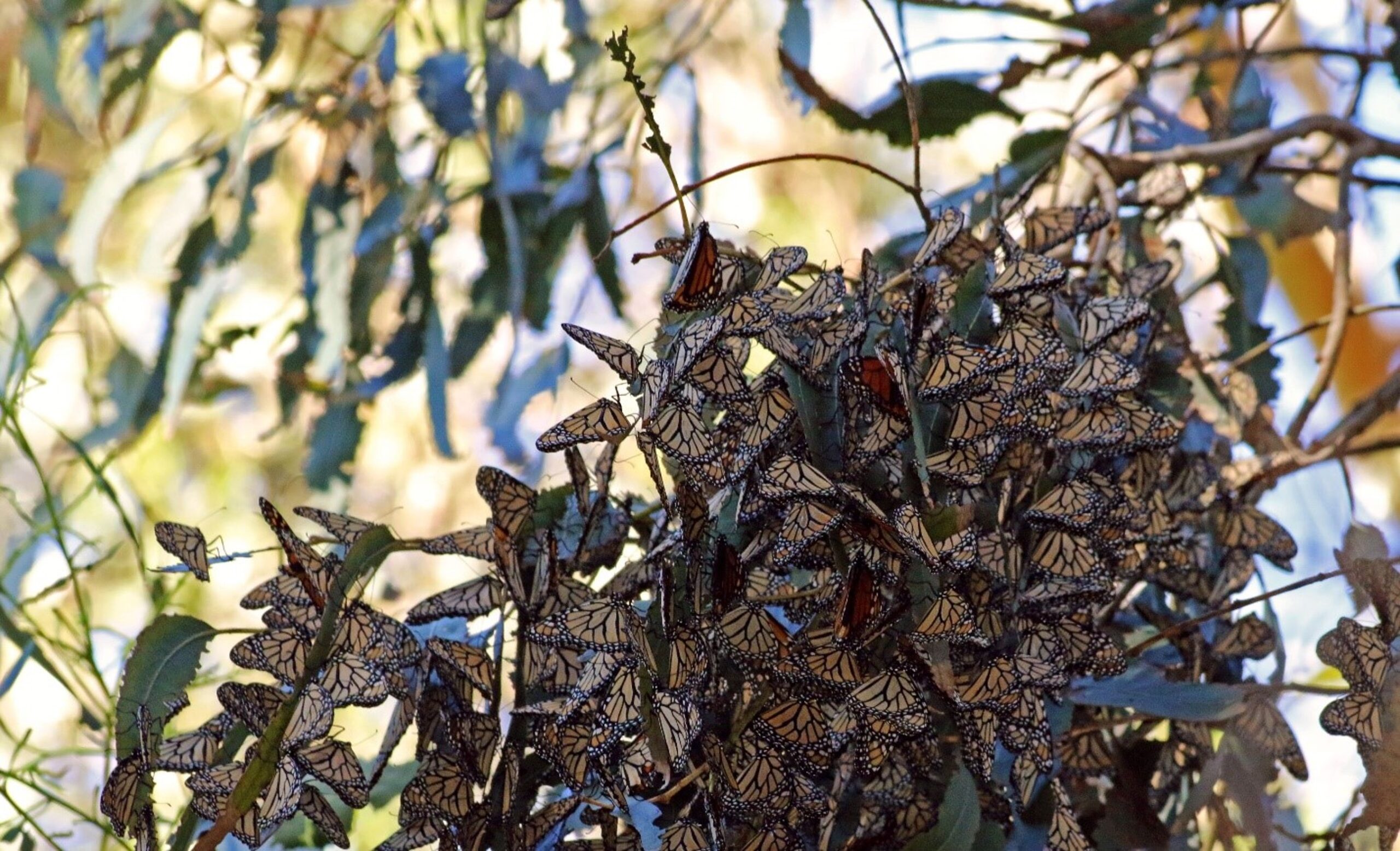
Overwintering monarchs gathered in a eucalyptus tree. Credit: USFS.
A 2017 study that modeled their historical numbers projected a 72% chance the western monarch will disappear within 20 years. Pesticides, destruction of milkweed, and climate change are all threatening the western monarchs, said Emma Pelton, an endangered species biologist with the Xerces Society.
The Xerces Society has annually monitored 16 overwintering sites since 2001 (they monitor dozens of other areas, but there are gaps in data collection). Their counts show major declines in every site.
In December 2024, the U.S. Fish and Wildlife Service proposed listing the butterflies as threatened under the Endangered Species Act and safeguarding their overwintering ground in California. For now, the western monarchs remain unprotected.
How I Made These Charts
To make the graph, I downloaded the annual overwintering counts from the Xerces Society website. Next, I downloaded the model from Schultz et al. 2017 and ran it on my computer. Finally, I summed the annual counts from Xerces Society data and plotted them alongside the model.
To make the map, I merged the overwintering counts with another dataset that contains the coordinates of each site that the Xerces Society visited. I removed the entries from 1997-2000 because the volunteer counters only visited a handful of places during those years. Finally, I excluded every site that did not have consistent, annual counts.